Lichen
Unveiling the hidden networks that sustain life.
A speculative symbiosis cultivated in liquid form, this project maps the invisible architecture of lichens by isolating and reuniting their elements in vitro. Through human mimicry of nature’s balance, it reveals the enigmatic connections that sustain ecosystems.
Symbiosis
Symbiosis is the close interaction between different species, shaping the dynamics of natural ecosystems. It includes mutualism (both partners benefit), commensalism (one benefits, the other is unaffected), and parasitism (one benefits at the expense of the other). These relationships form the foundation of our research, revealing the intricate balance within nature.
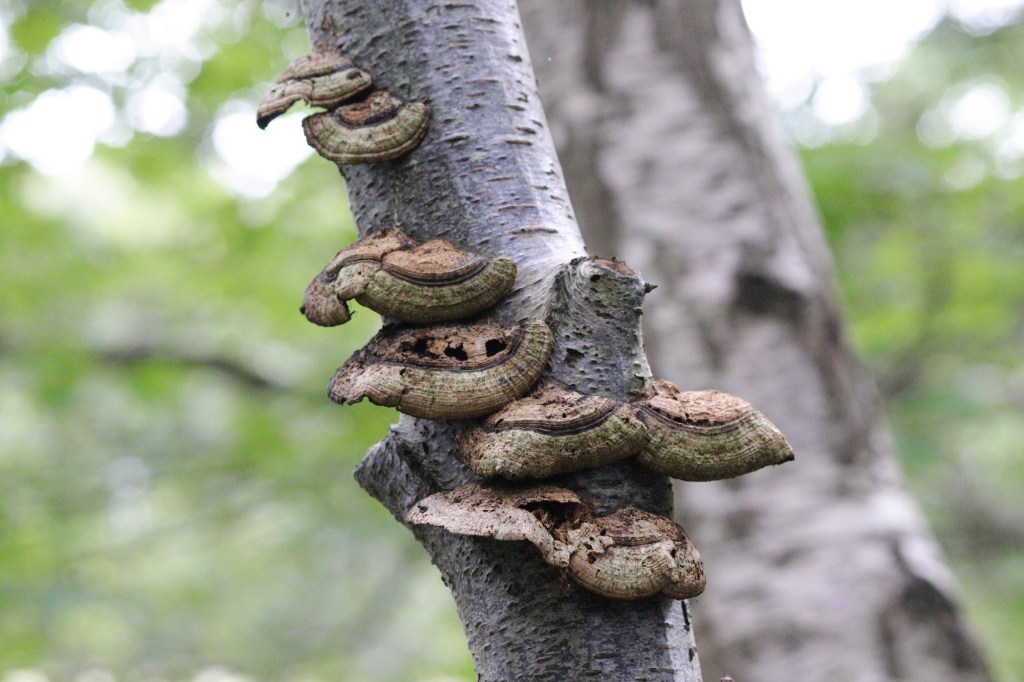
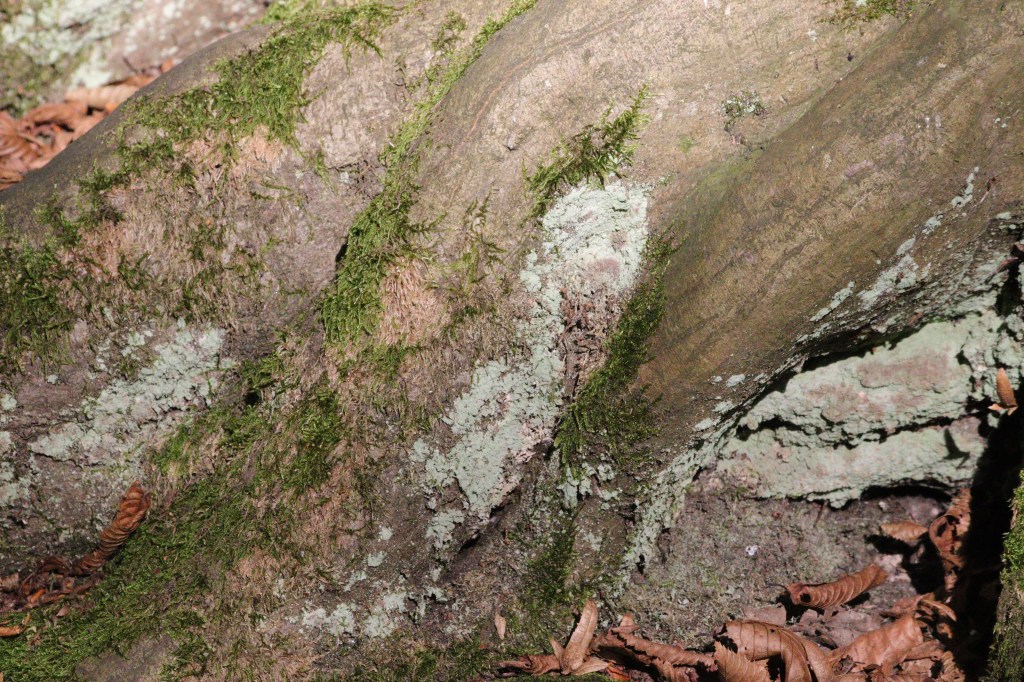
Lichen
Lichens are symbiotic entities formed by a fungus and an alga or cyanobacterium. Often seen as classic examples of mutualism, they embody a relationship where the mycobiont (fungus) benefits from the carbon produced by the photobiont through photosynthesis.
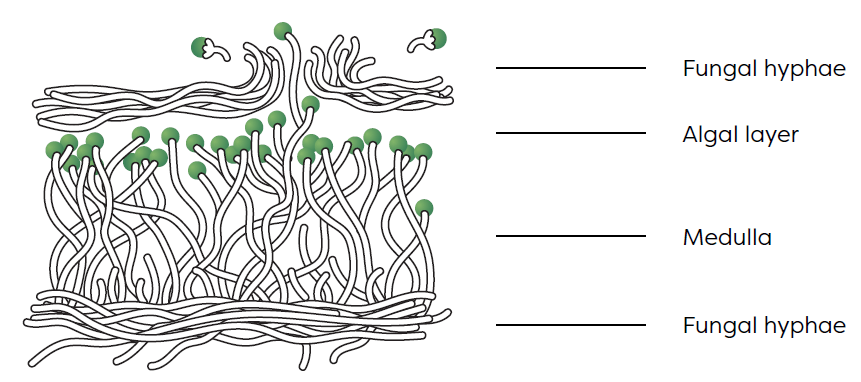
In lichens, fungal hyphae form a protective network that surrounds algal or cyanobacterial cells. This close contact enables exchange: the photobiont produces sugars through photosynthesis, while the fungus supplies water, minerals, and shelter. Their layered structure reflects a functional balance, a model of cooperation and efficiency.
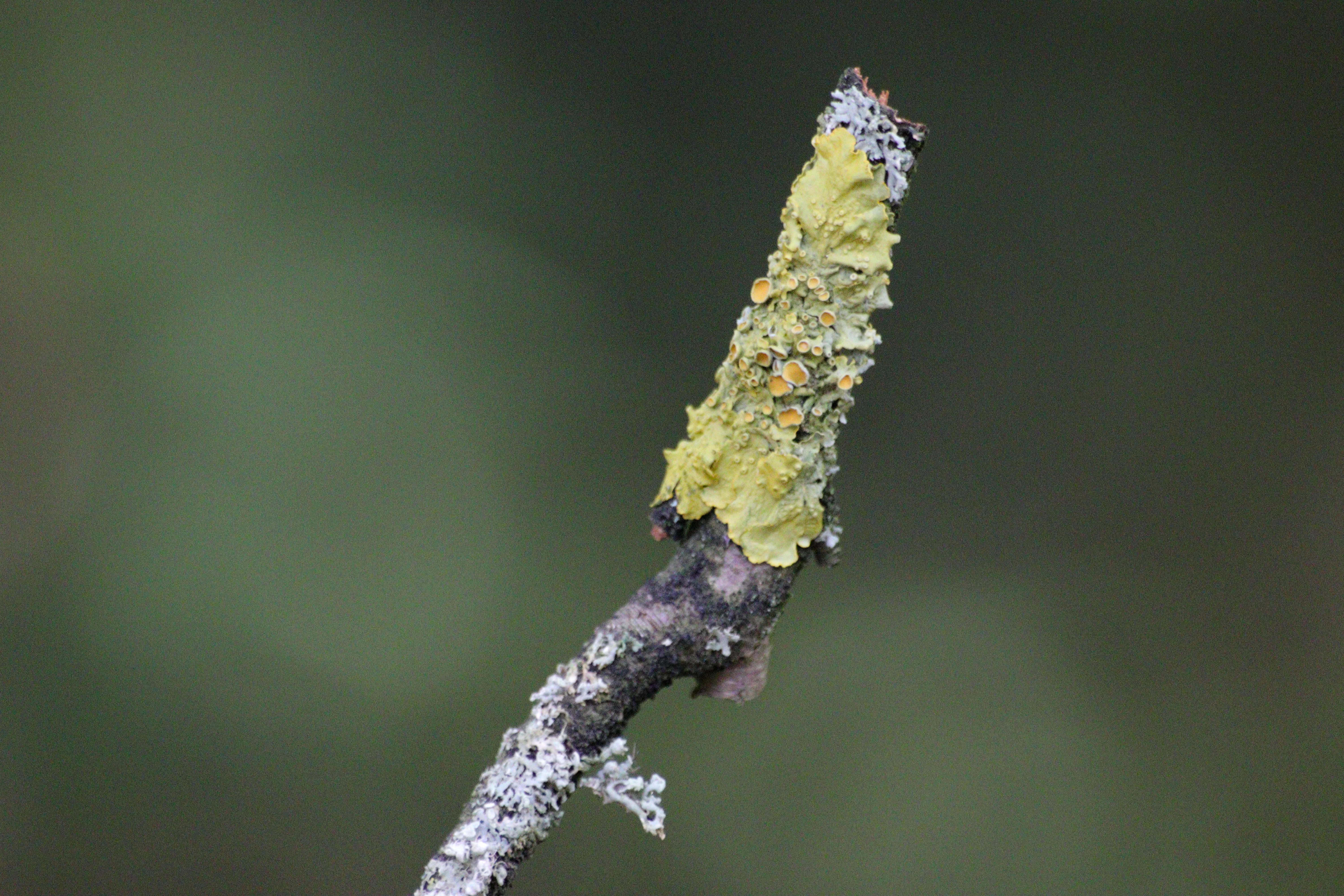
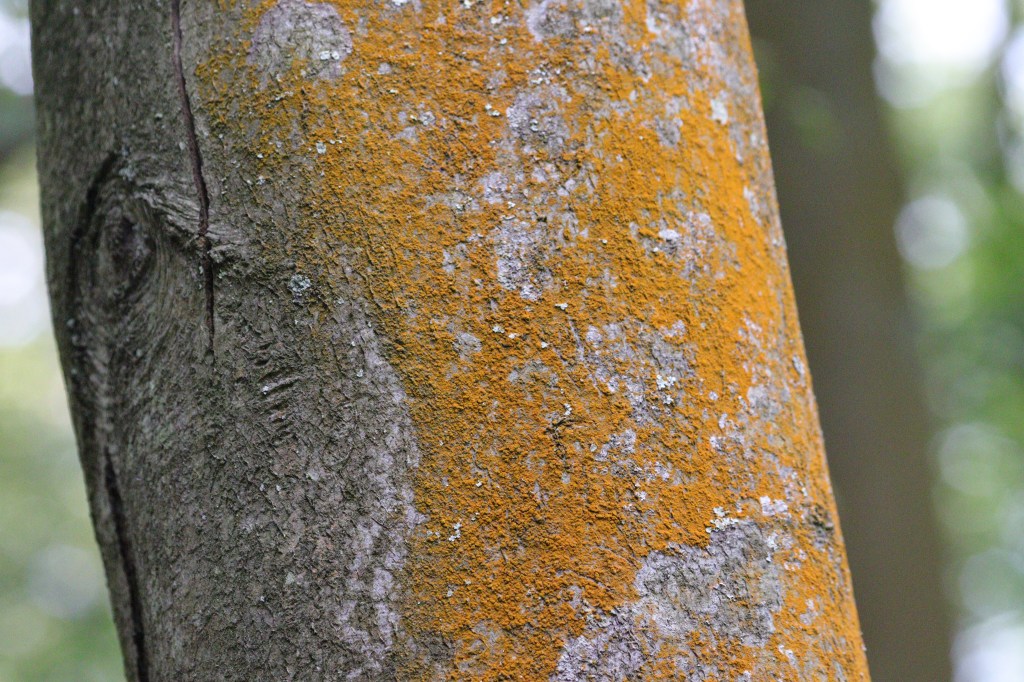
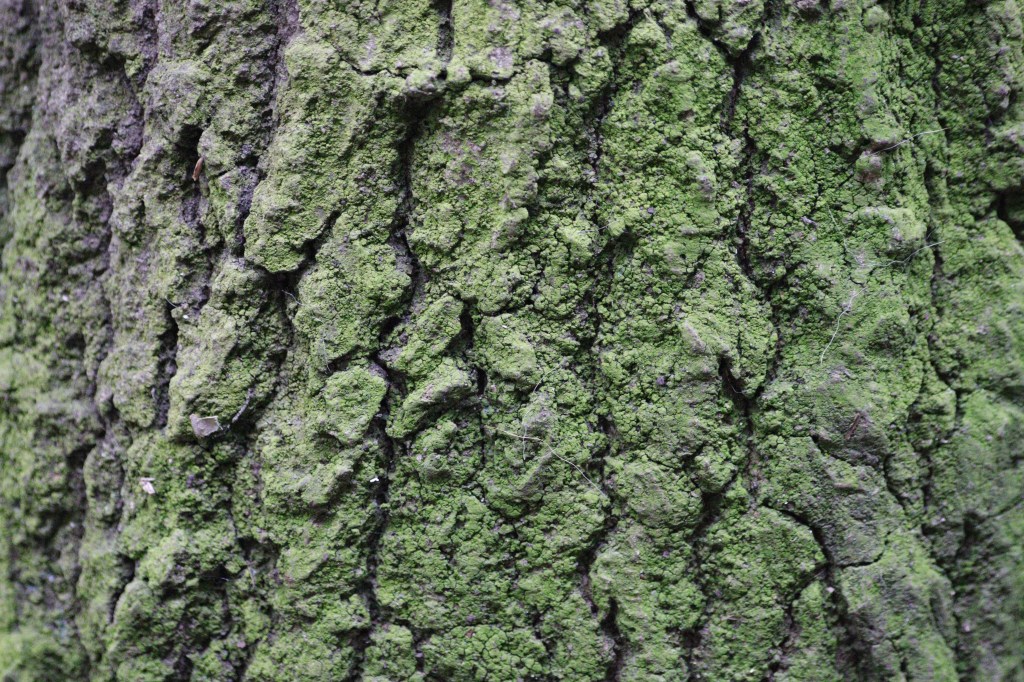
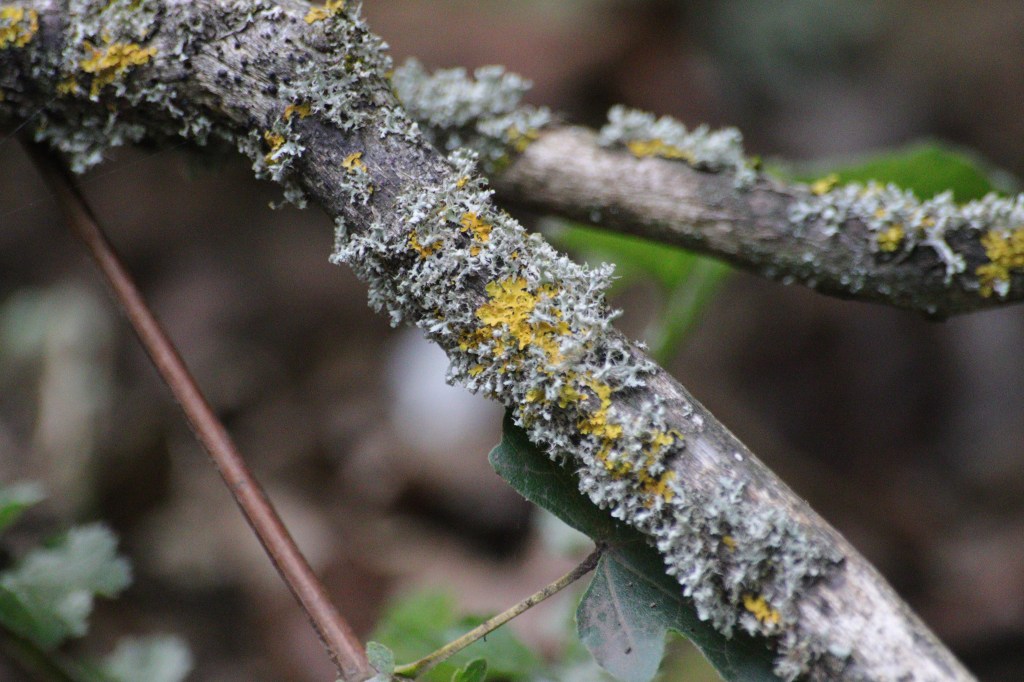
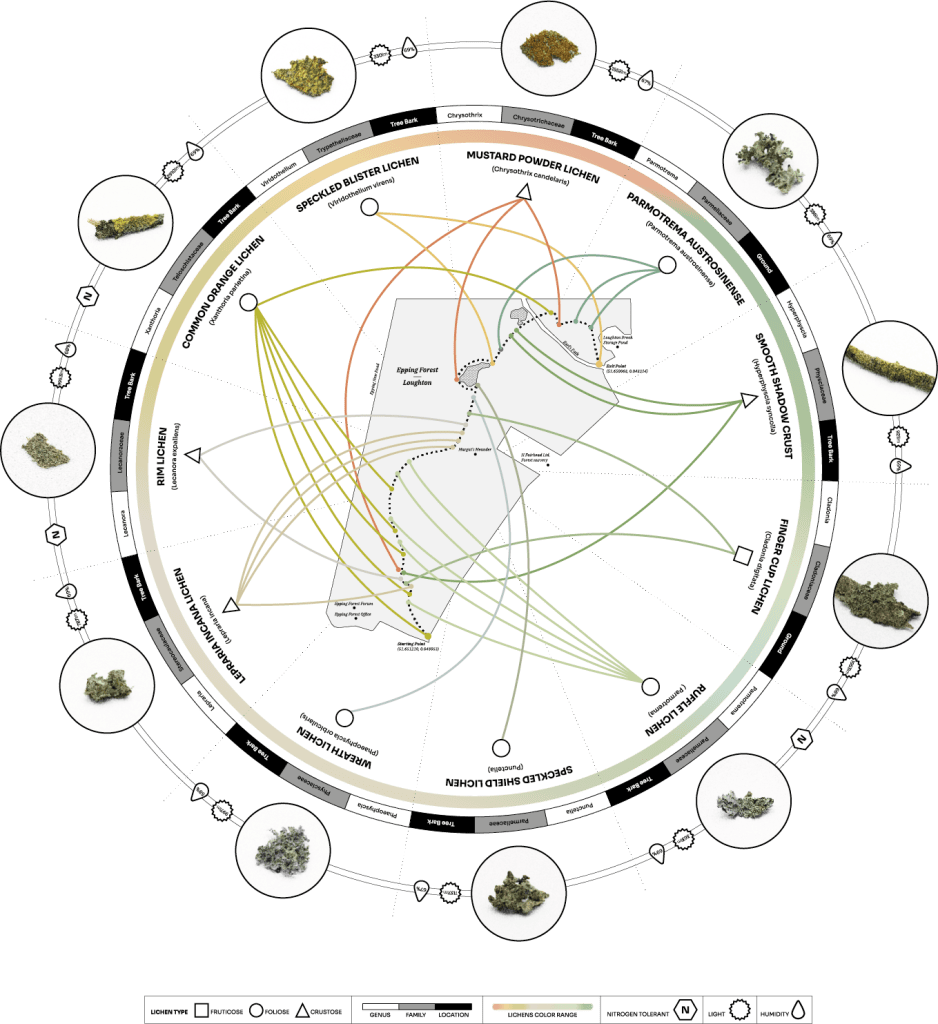
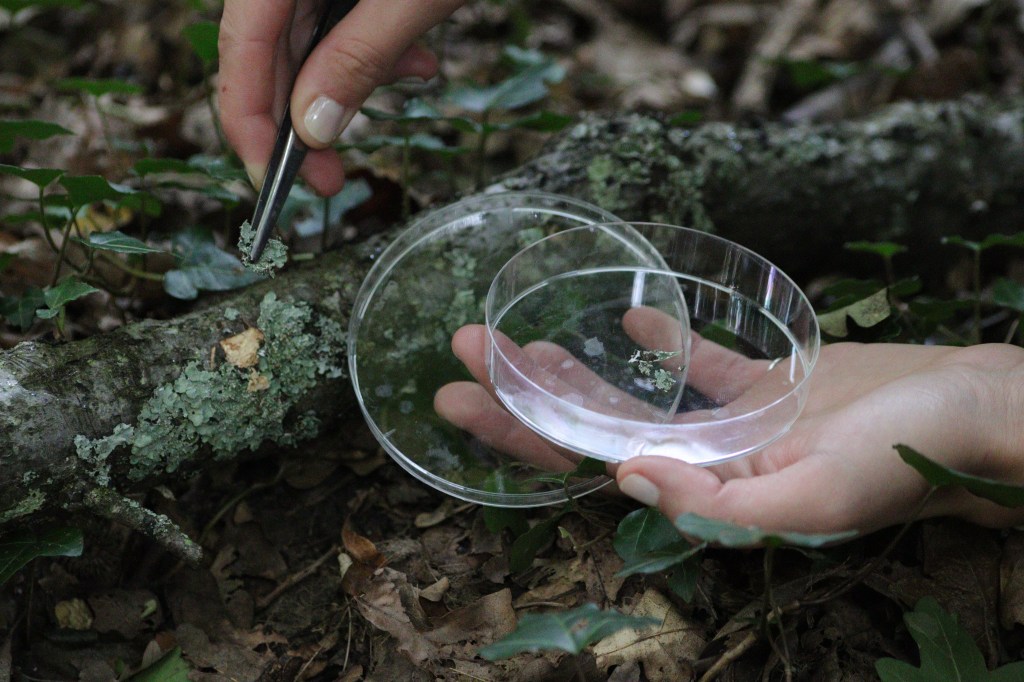
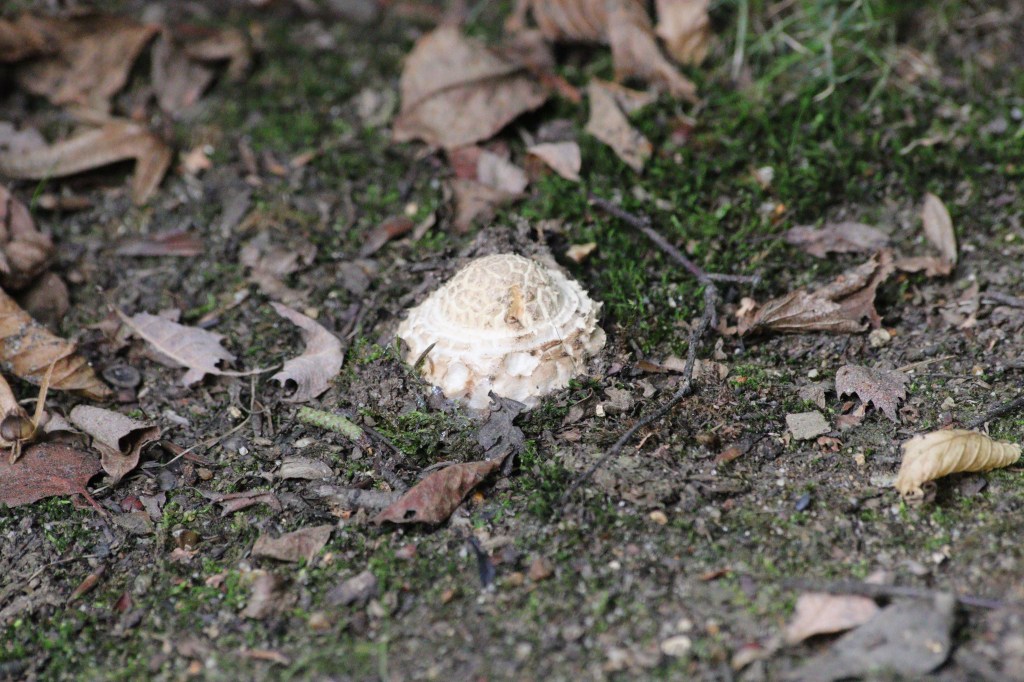
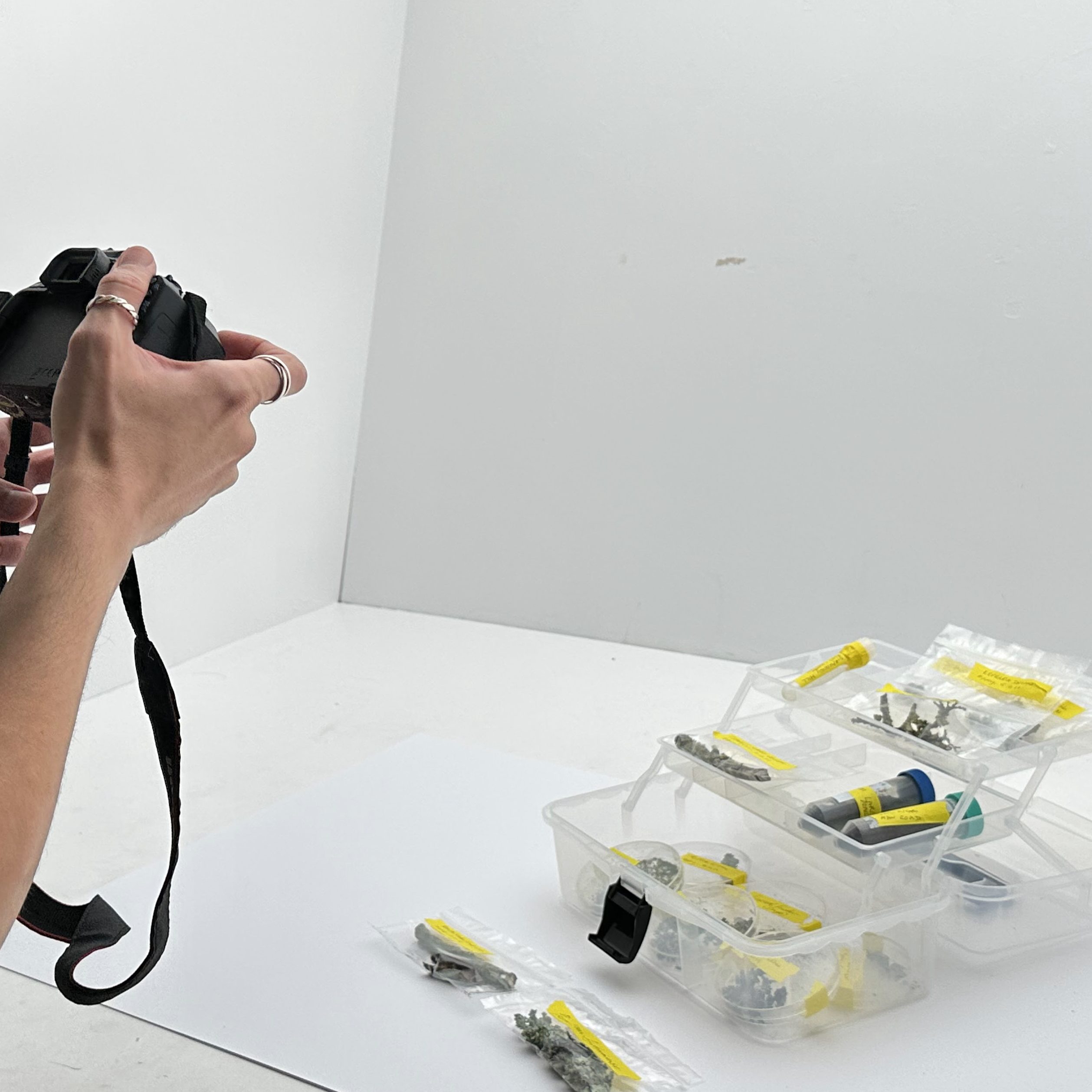
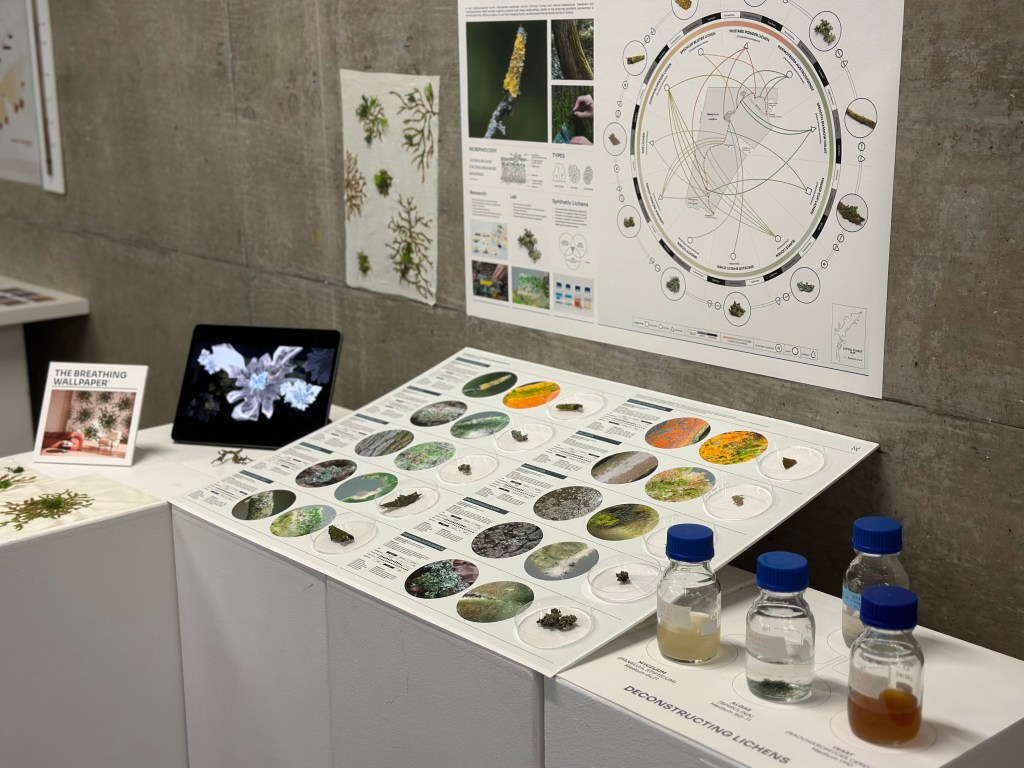
During our exploration of Epping Forest (UK), we collected, identified, and classified 12 lichen species. Each sample was chosen based on its location, taxonomy, and ecological role within the forest ecosystem.
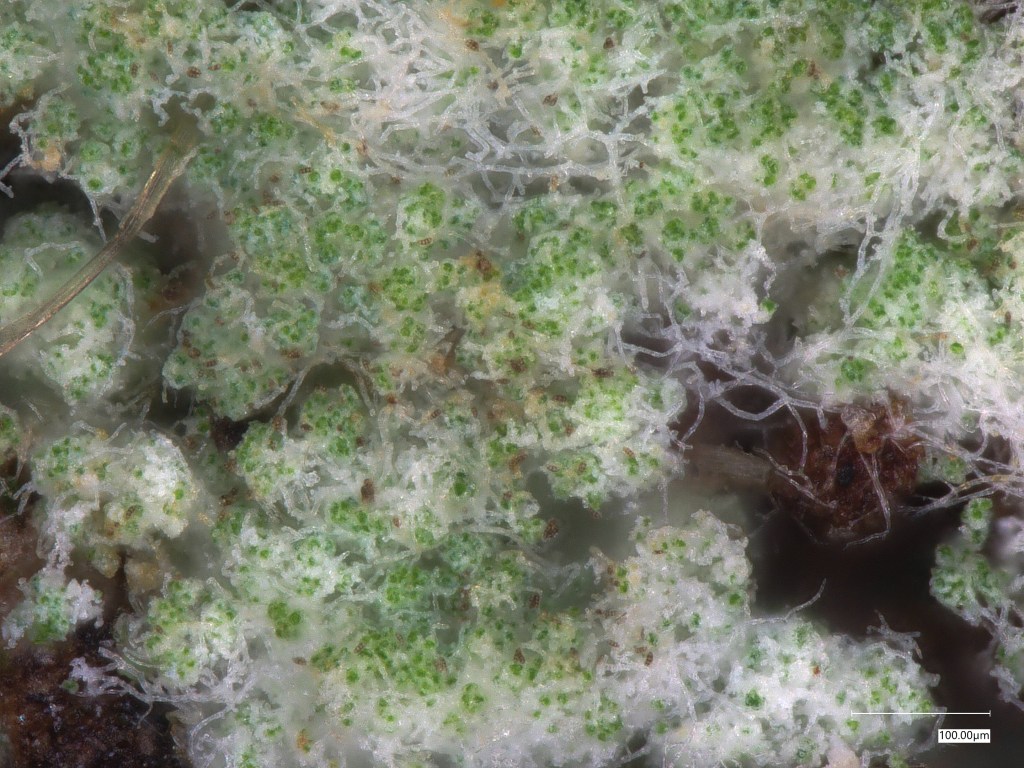

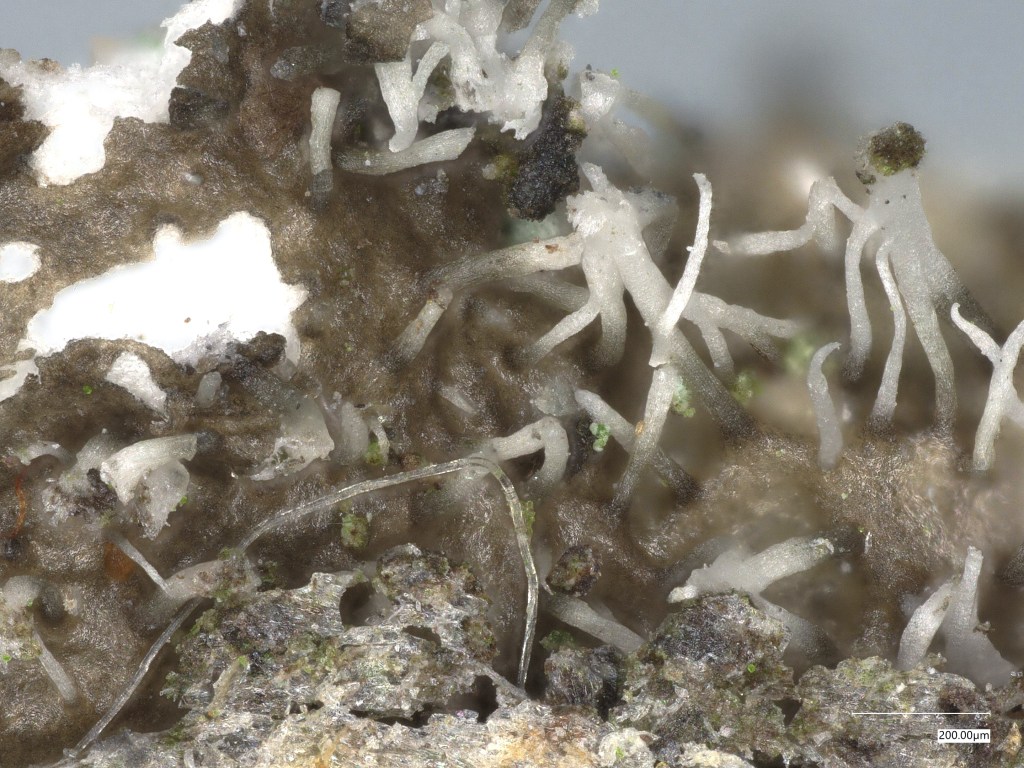
By observing each lichen sample under the microscope, we analyzed its internal structure and identified the elements present. Alongside the fungal hyphae, we discovered traces of moss, wood, roots, and even tiny organisms, revealing the complex micro-ecosystem embedded within each specimen.
SYNTHETIC LICHEN
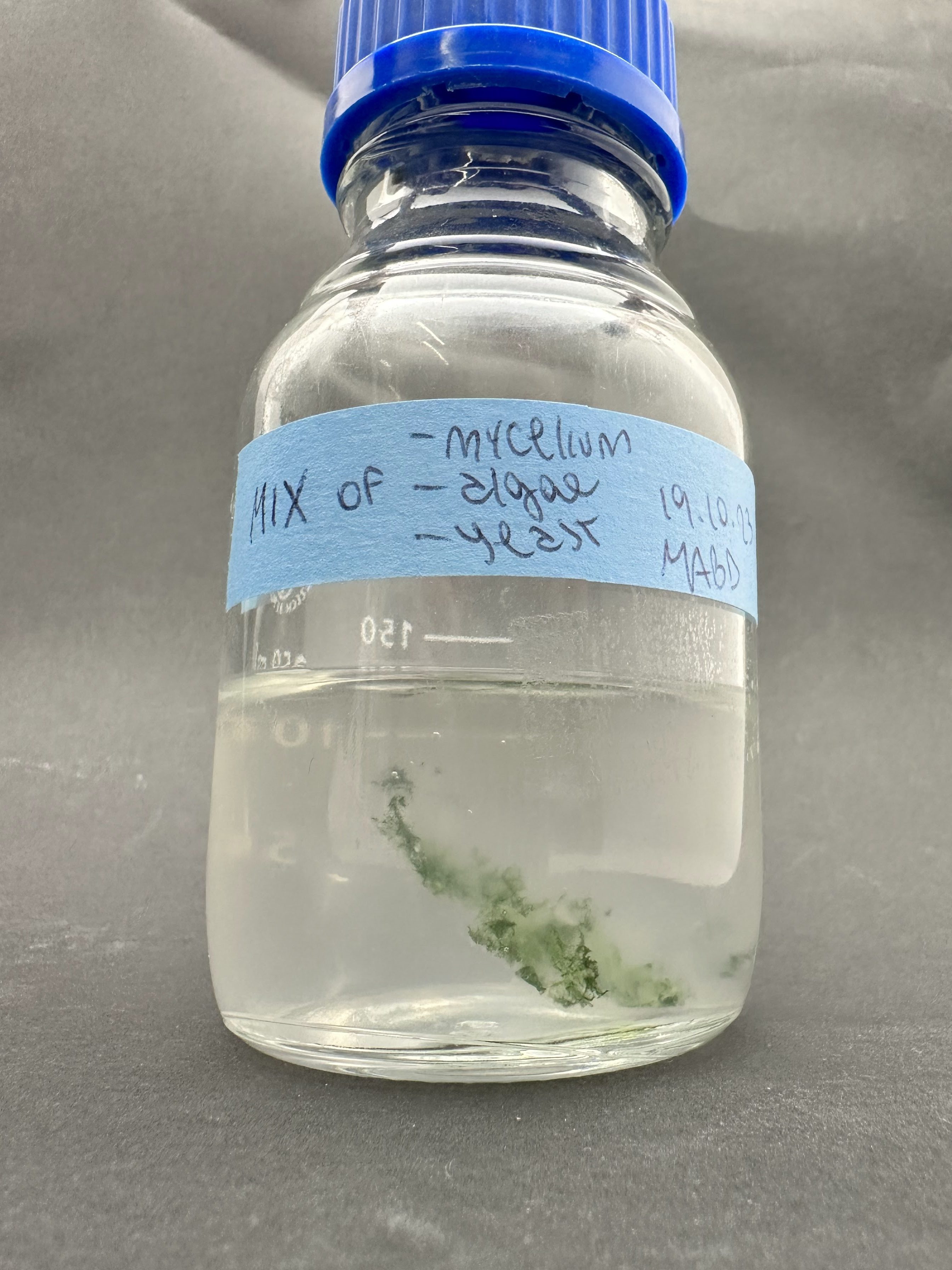
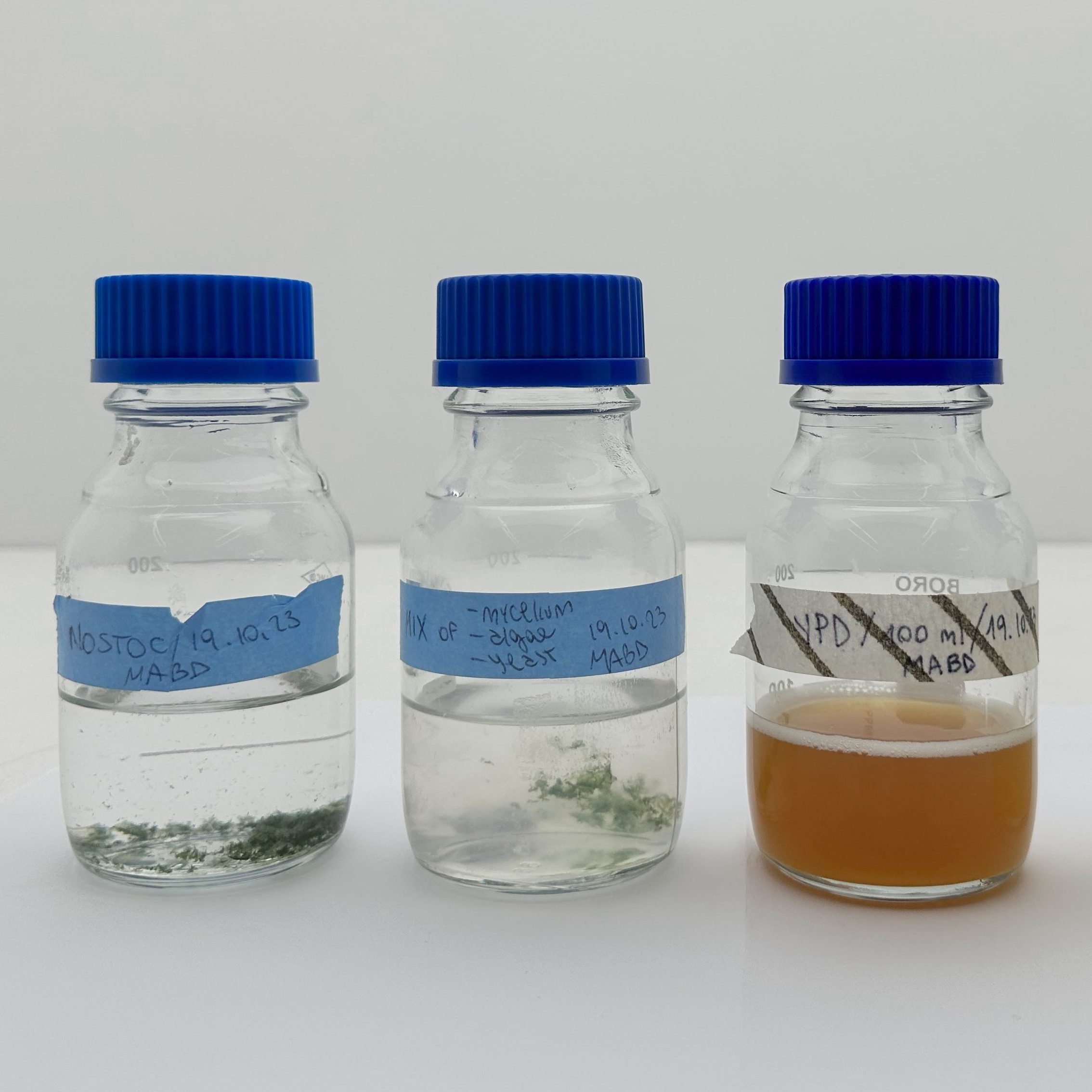
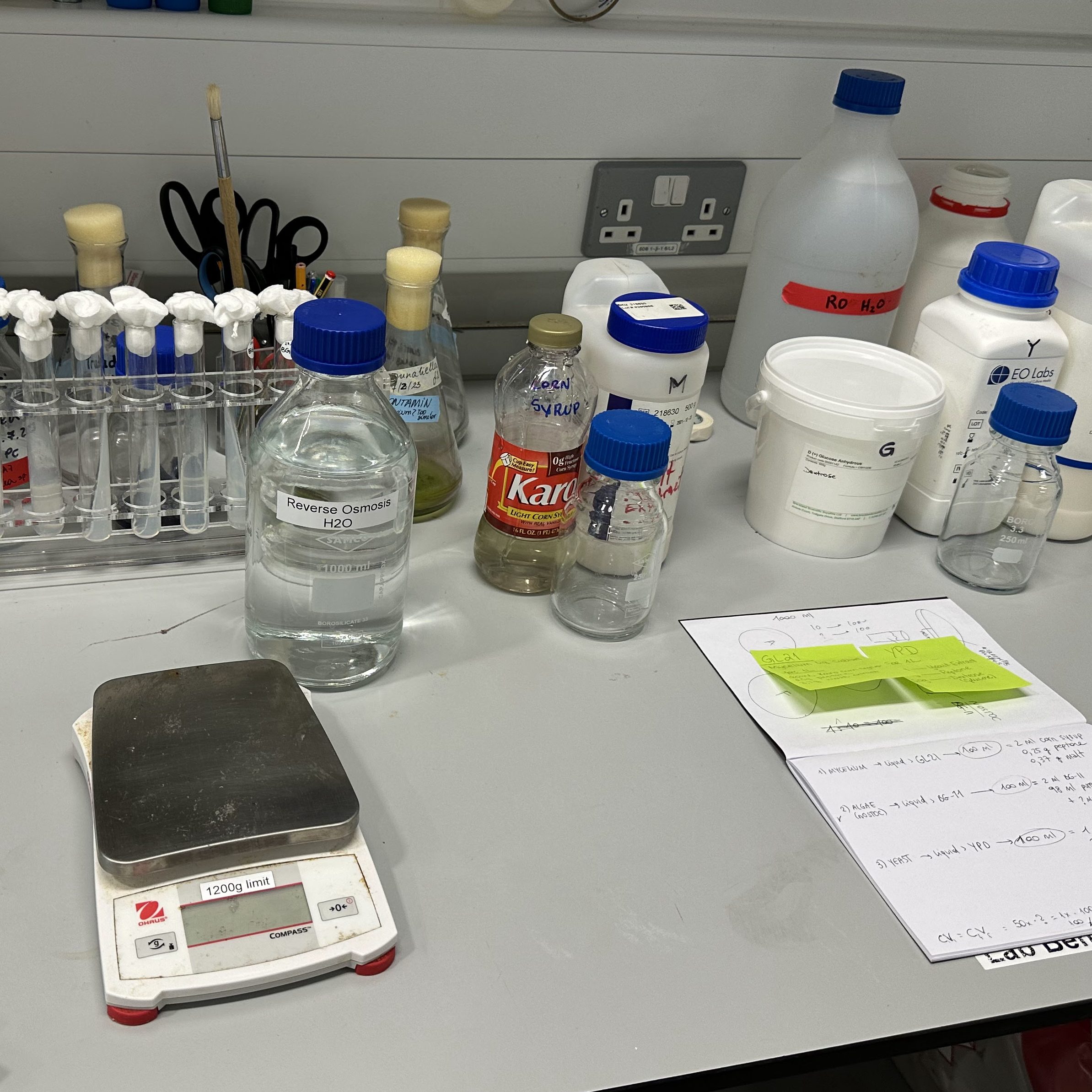
The project culminates in an artificial mapping of lichen components by cultivating each element—alga (Nostoc), yeast (S. cerevisiae), and fungus (P. stipticum)—in separate liquid media. These are then combined in a shared vessel, allowing the most compatible to thrive. This co-culture reflects natural symbiosis: under the microscope, fungal hyphae were observed wrapping around algal cells, echoing the mutualistic architecture of lichens. The process becomes a human-made simulation of nature’s balance—visualizing what is usually invisible.
Algae – Nostoc
Medium BG-11
Yeast – S. cerevisiae
Medium YPD
Mycelium – P. stipticum
Medium GL-21
CREDITS
A project in collaboration with MA Biodesign @mabiodesign
and Central Saint Martins @csm_news
Team:
Elie Al-Marji
Teresa Colombo
Kirry Bixuan Li
Charon Yikun Ma


 Teresa Colombo